Talus.
A single-person alpine bivouac, designed as a speculative Arc'teryx extension into emergency shelter.
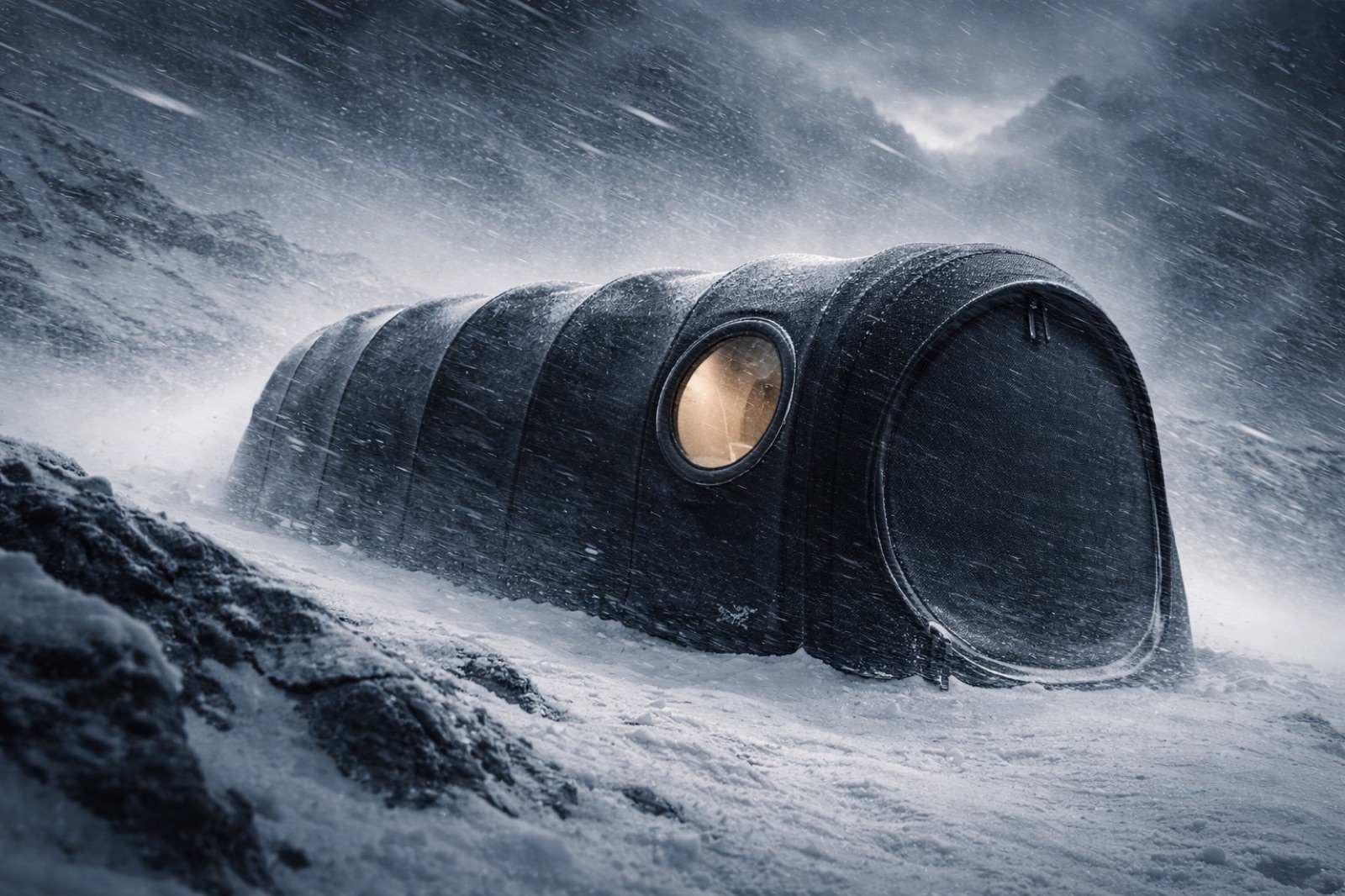
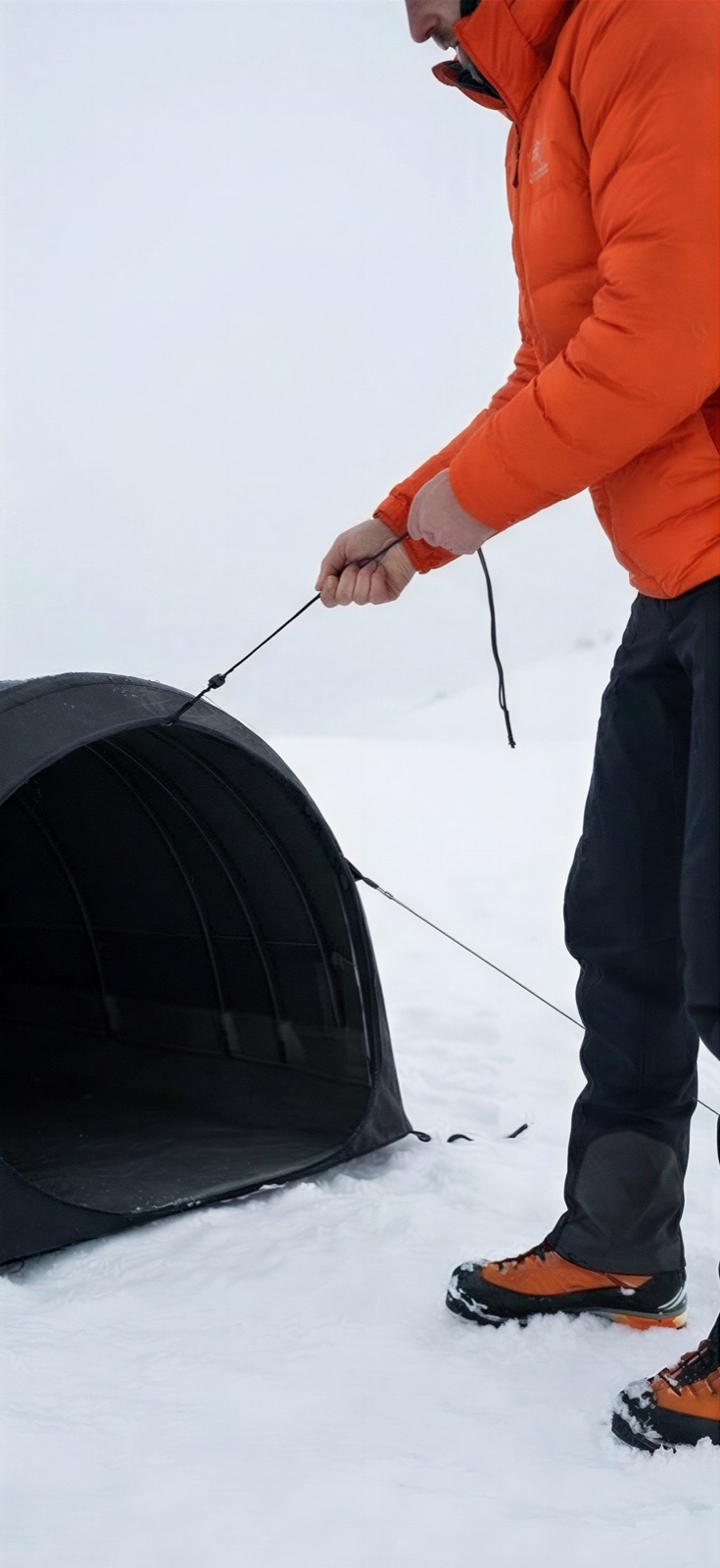
Talus is a single-person alpine bivouac shelter conceived as an extension of the Arc'teryx product line into emergency shelter. The brand has refined high-performance technical apparel across four decades. The proposal applies the same engineering principles to the next vertically adjacent category.
The shelter addresses a documented gap in the market for premium technical apparel. No equivalent brand currently produces a comparable category of emergency expedition shelter. The result is a system specified for self-rescue conditions above treeline, deployable by a single climber in under ninety seconds.
Tension over compression.
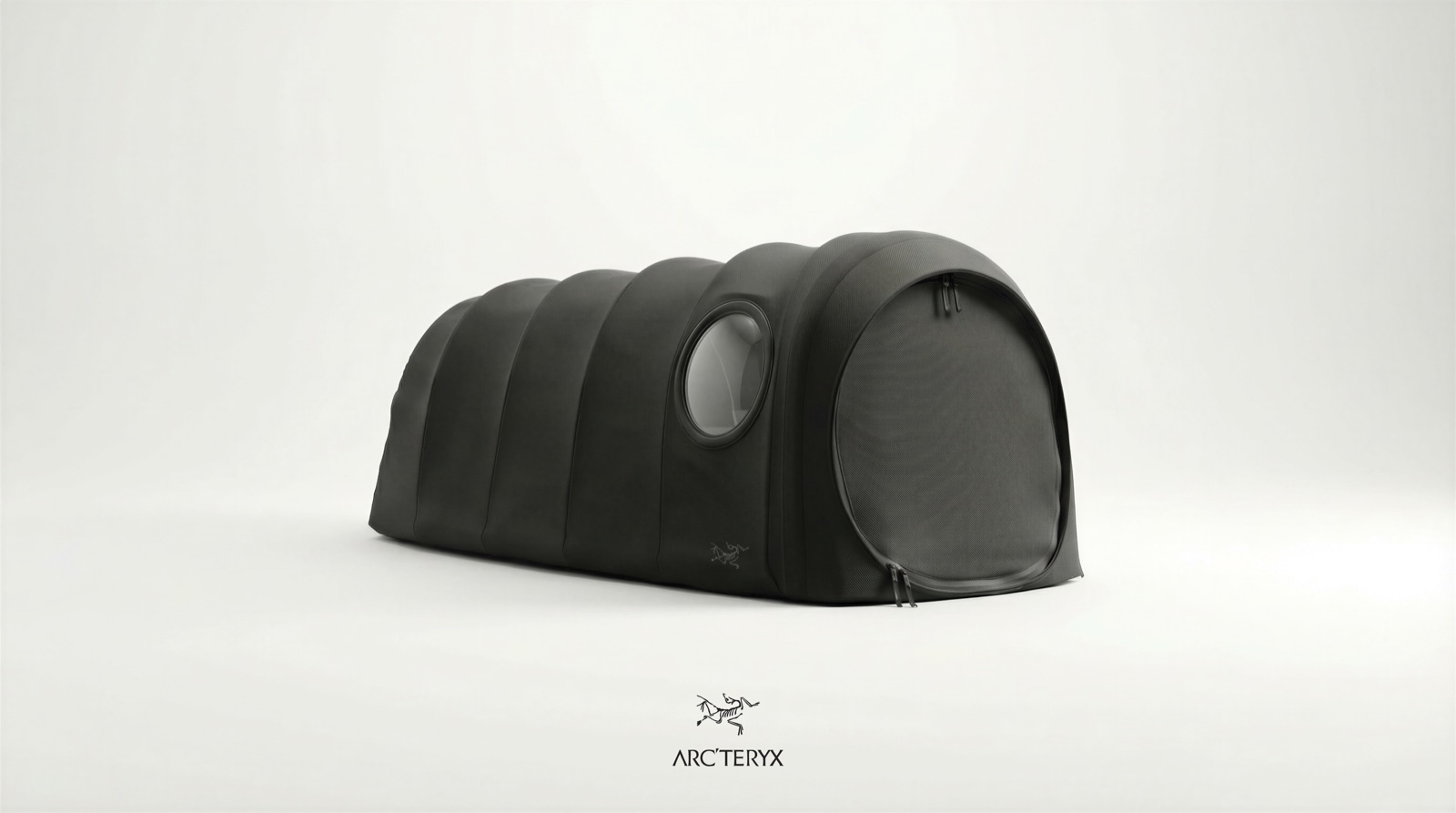
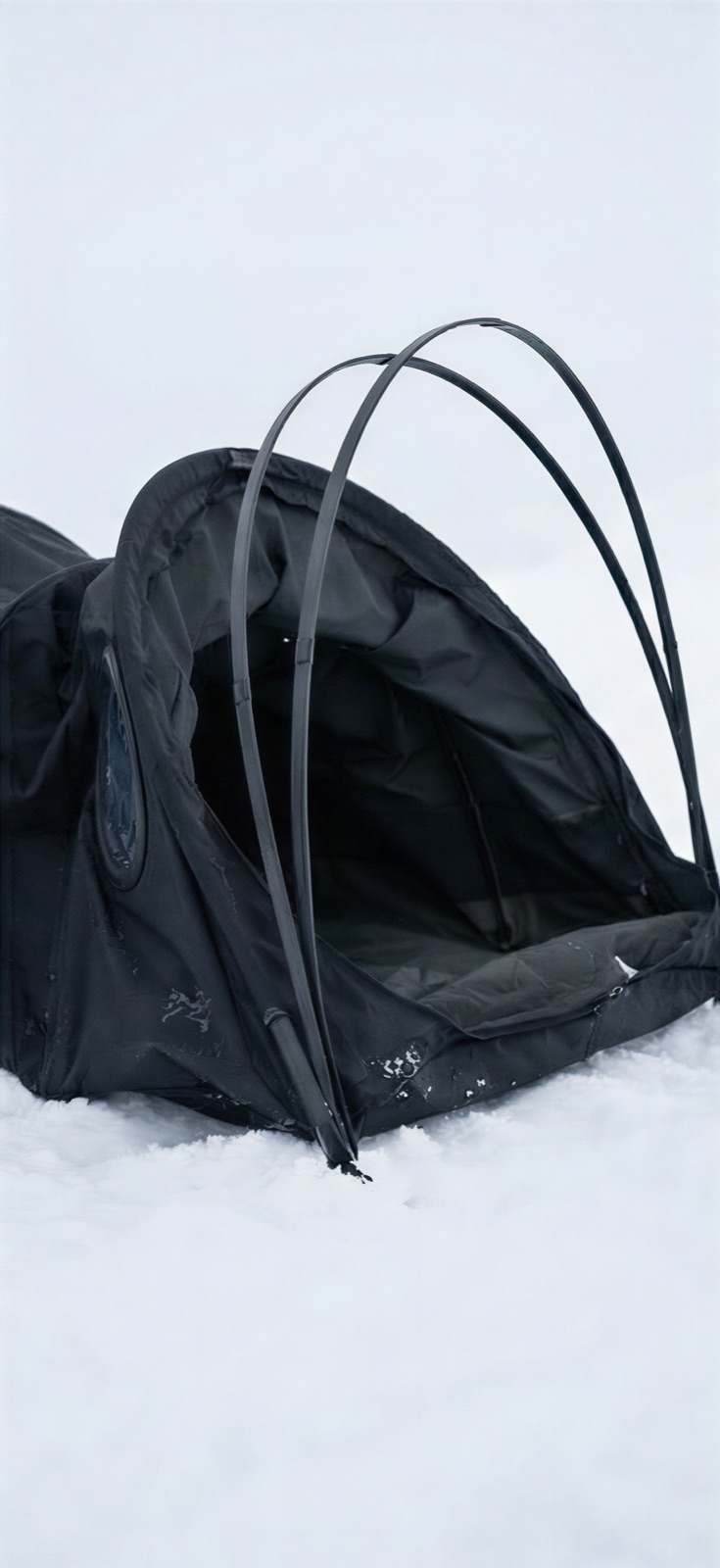
Conventional alpine shelters rely on triangulated pole systems that operate under compression and produce faceted, geometric surfaces. Talus instead employs a five-rib catenary tension geometry. A single piece of three-layer Gore-Tex Pro wraps the frame. Each rib carries its load in tension, which produces the formal language of a taut, grown surface rather than an assembled one.
The design language follows from the brand's apparel pattern logic. Arc'teryx has spent decades refining organic, articulated patterning across the Alpha, Beta, and Atom product families. Talus translates that grammar from garment to architecture.
Material continuity.
Every material specified for Talus exists within the existing Arc'teryx supply chain. The membrane is three-layer Gore-Tex Pro as used in the Alpha SV jacket. The ribs are thermoformed ALUULA composite, also present in the brand's pack line. Seam tape uses the same micro-seam construction the brand has standardized at fifty percent reduced width.
No speculative material science is required. The proposal is a category extension rather than a fabrication research program.
Adaptive window system.
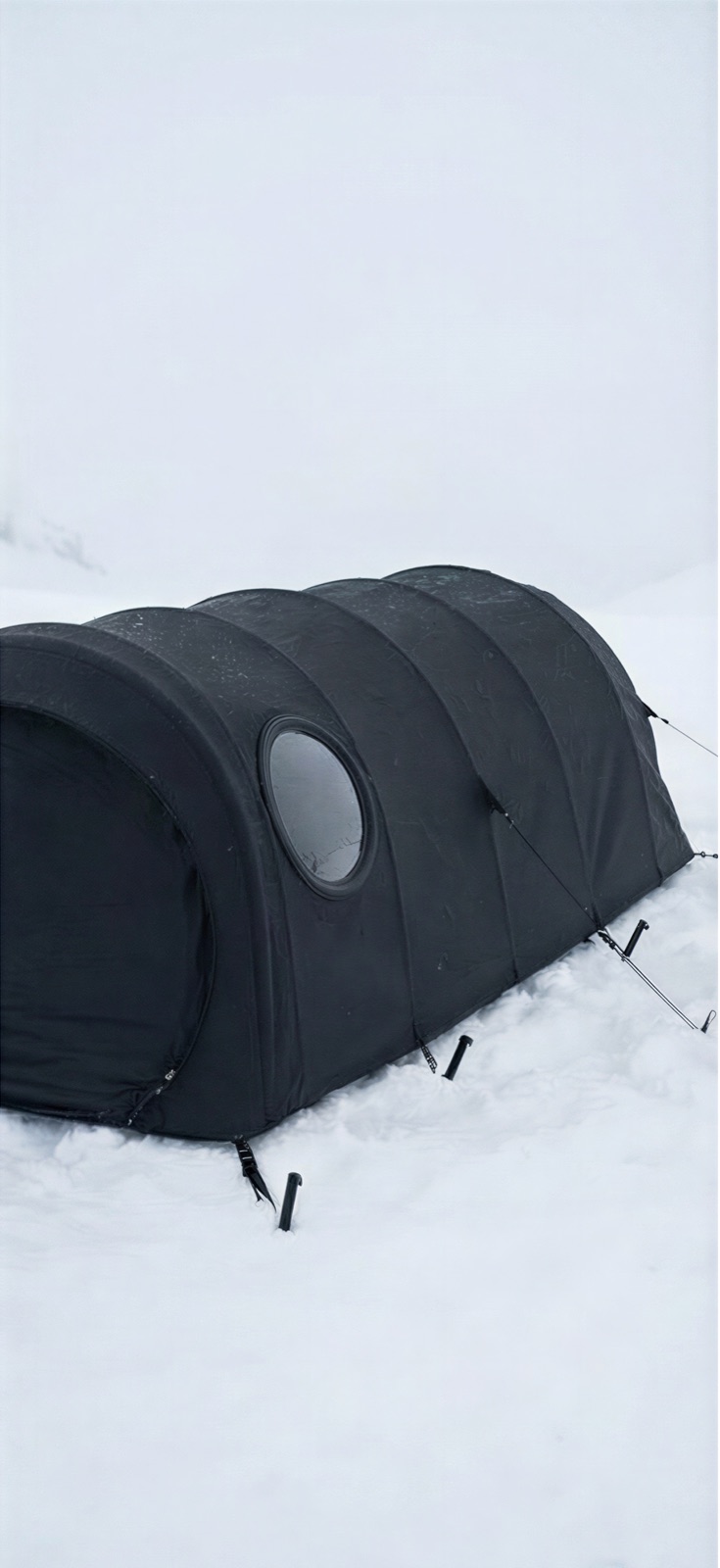
The window system operates across three configurable layers: an outer opaque weather panel for storm conditions, a middle mesh for ventilation, and an inner visibility panel. Each layer rolls independently. Entry is provided by a single curved WaterTight zipper that follows the membrane's tension lines.
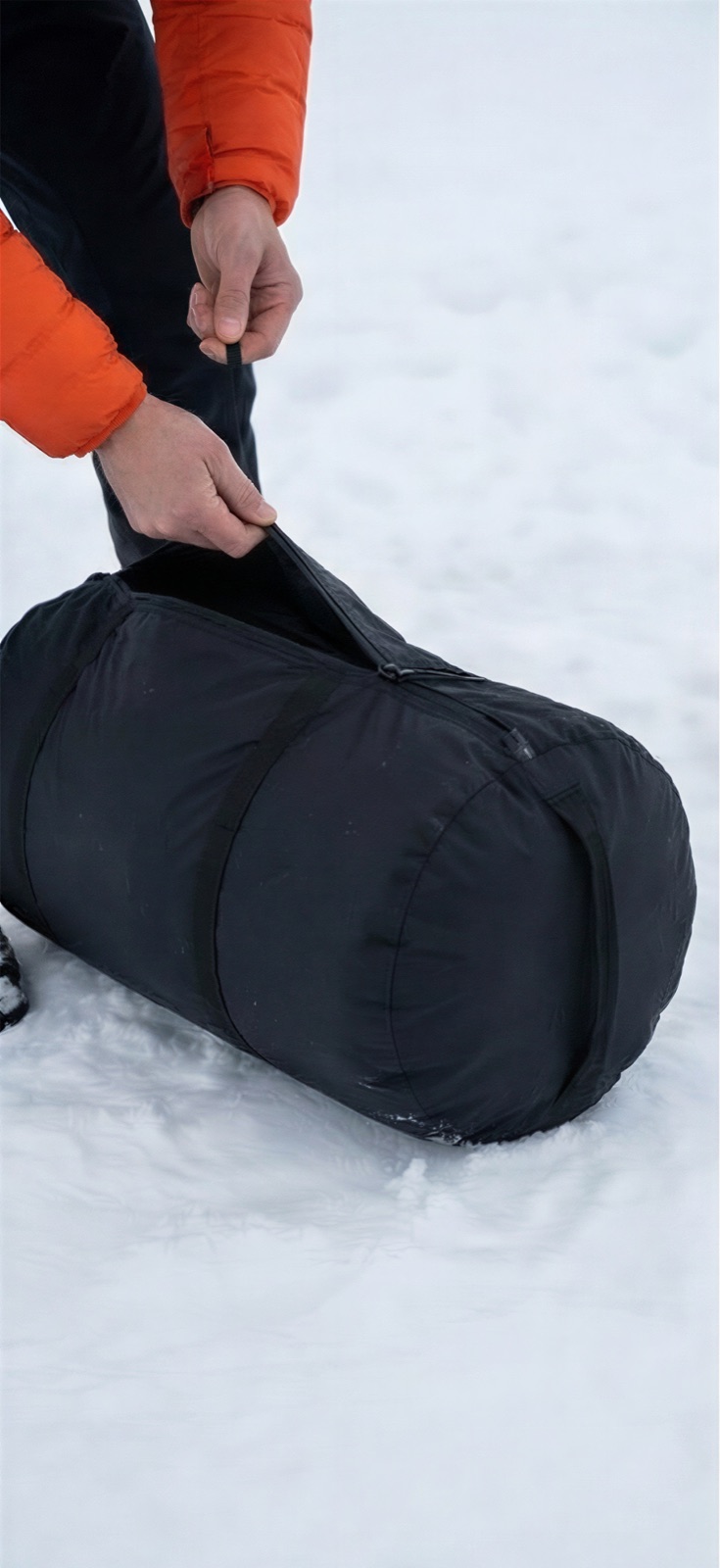
Packed dimensions are 2.8 liters at 1.85 kilograms. Deployed floor area is 2.1 square meters. Peak interior height is 95 centimeters. Wind rating is 120 km/h. Operating range spans negative 30 to positive 15 Celsius.
| Weight | 1.85 kg |
| Packed size | 45 × 12 × 12 cm |
| Floor area | 2.1 m² |
| Peak height | 95 cm |
| Wind rating | 120 km/h |
| Temp range | −30 °C to +15 °C |
| Setup time | Under 90 seconds |
| Membrane | Gore-Tex Pro (3-layer) |
| Frame | ALUULA composite (5 ribs) |
| Entry | WaterTight arc zipper |
Closing the category.
No premium technical apparel brand currently manufactures expedition shelters. The climber who owns the Alpha SV, the Beta AR, the Atom LT, and the Cerium relies on a separate brand at the moment shelter becomes necessary. Talus closes that category with continuity of material, manufacturing, and standard of finish.